
New AI documents analyser to increase billing self-service
Senior product designer Saas fintech | 0 - 1 conversational design Q3 2025+ In Q3 2025, I led the design of an integrated AI-powered transactions document analyser to reduce operational costs for subscribers under $200 MRR. My solution introduced a new file viewer and conversational patterns that allow customers to interact with invoices, credit notes and receipts directly in-app.
Impact in Q3

Reduced error rate in viewing documents

Decreased operational cost of billing inquiries

New tracking points to unlock further opportunities
details available during interview only
Opportunity
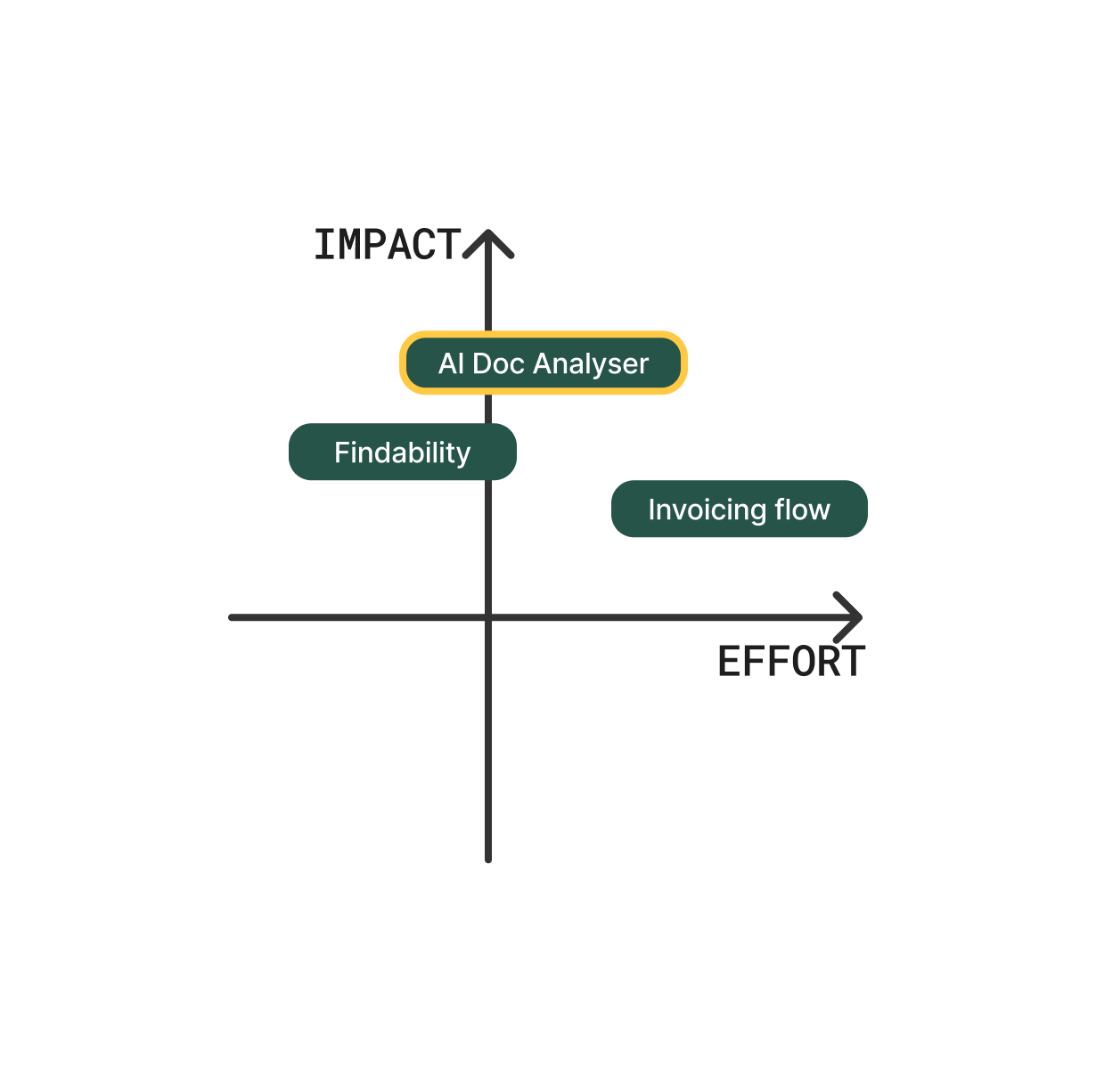
In 2025, one of the HubSpot business goals was to reduce operational cost of subscribers who bring under $200 monthly recurring revenue. Within the Fintech department, customer inquiries were the main cost driver for this segment. Partnering with a Senior Product Manager and Technical Leads, I prioritised an opportunity to reduce inquiries related to transactional documents and their comprehension. I identified a strategic initiative to create a new AI analyser that provides contextual answers to customers.
Process
-
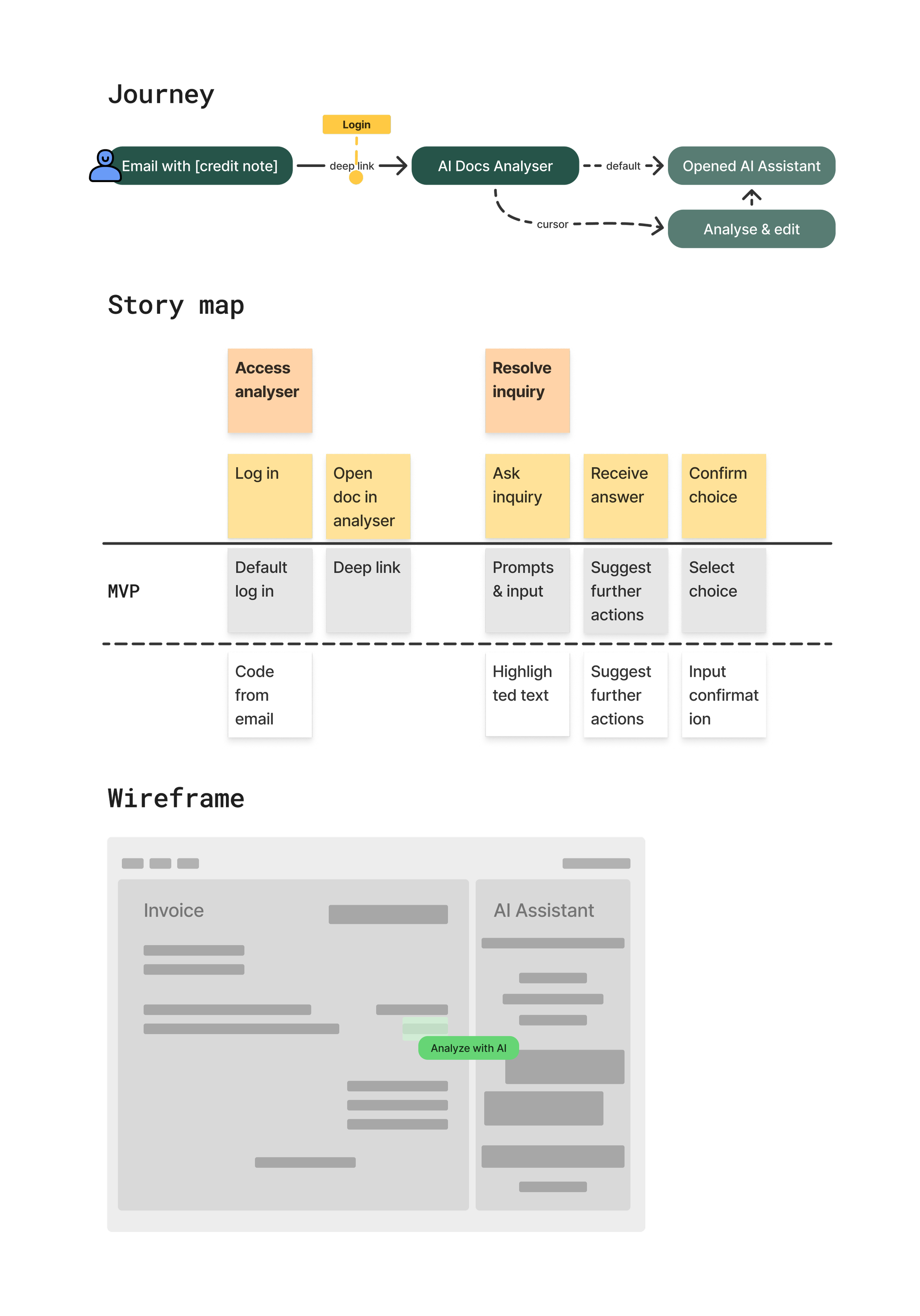
Targeting small business owners, I knew from existing research that they want to see the big picture to understand the business implications of billing. Customers raised most of the costly inquiries following emails with transaction documents and gaps in understanding them. I and other team leads decided to address the whole journey and introduce a new space in the Account & Billing. After a risk analysis, we decided to roll the new Analyser out staggered and rely on previous customer interviews, MVP and iterations to maximise its time-to-value.
-
I facilitated ideation workshops with Subject Matter Experts, data analyst, and the engineering team. I followed this up with affinity mapping, and gathered the implementation team for story mapping the features against releases.
Then, I collaborated with an AI designer on needed conversational patterns. After gathering internal feedback, I developed a high-fidelity design. -
Throughout, I kept communicating on feasibility and best practices with a senior front-end engineer and back-end tech lead to focus on delivering value fast. Their work started concurrently, and I maintained check-ins to maintain the high quality accessible UX implementation despite MVP.
Solution
Knowledge gained

Meeting financial regulations about customer consent with AI interactions and their limits

Patterns for conversational design interactions in 2025

Different benefits of prototyping with Loveable and Figma
How I work with evolving the product
Alongside the revolutionary features and DesignOps, there always need to be room for evolution and keeping the whole experience relevant. Follow along my process in optimisation for increased customer satisfaction.